A fire door is the easiest fire-compartment component to get wrong after installation: the class on the drawing is correct, but the closers have been swapped for ordinary hardware; the leaf passes handover closed, then gets wedged open. Since 1 May 2026 the new mandatory Chinese standard GB 12955-2024 Fire-resistant doorsets has been in force, replacing the 2008 edition. Purchasing and acceptance criteria need to be realigned to it.
Contracts signed after that date should not rely solely on type-test reports issued against the 2008 edition. Project-level requirements still come from the approved design, fire-review comments and the current general fire code (for example GB 55037-2022); product-level requirements come from GB 12955-2024.
The 2008 edition was commonly read in terms of material (steel, timber, steel-timber, other) plus the Class A / B / C ratings known in Chinese as 甲级 / 乙级 / 丙级. GB 12955-2024 adds classification by application: doors for escape routes, doors for plant and equipment rooms, and doors for dwelling entrances. The same fire rating therefore carries different expectations for hardware, opening behaviour, linkage and durability. Always state the installation location in the enquiry.
By fire performance, the new edition defines Class A (insulating), Class B (partially insulating) and Class C (non-insulating) doorsets, with designations such as A1.5 / A1.0 / A0.5 expressing minutes of integrity and insulation. The familiar three grades map to the A-class steps:
| Common grade | New code | Integrity / insulation | Typical location |
|---|---|---|---|
| 甲级 (Class A / Grade 1) | A1.5 | ≥ 90 min / ≥ 90 min | Openings in fire walls, critical plant rooms |
| 乙级 (Grade 2) | A1.0 | ≥ 60 min / ≥ 60 min | Protected stairwells and lobbies, enclosed stairs |
| 丙级 (Grade 3) | A0.5 | ≥ 30 min / ≥ 30 min | Inspection doors to cable and service shafts |
These locations are a summary, not a specification: the approved design and fire-review decision govern each project. Treat online clause cheat-sheets as background reading only.
Against the 2008 text, GB 12955-2024 revises appearance, key material and hardware performance requirements, and introduces classification by application, mechanical performance, linkage signal reception and feedback, smoke-tightness, resistance to water-jet impact, plus tighter environmental requirements for materials. The first two matter most for normally-open doors: the leaf must close on a fire signal and report its state back to the fire control room. The last two address two real failure modes: smoke leakage through gaps and degradation under firefighting water.
A fire door is a system: frame, leaf, insulating core, hardware, seals and linkage. Replace any component and the type-test conclusion for the doorset no longer holds.
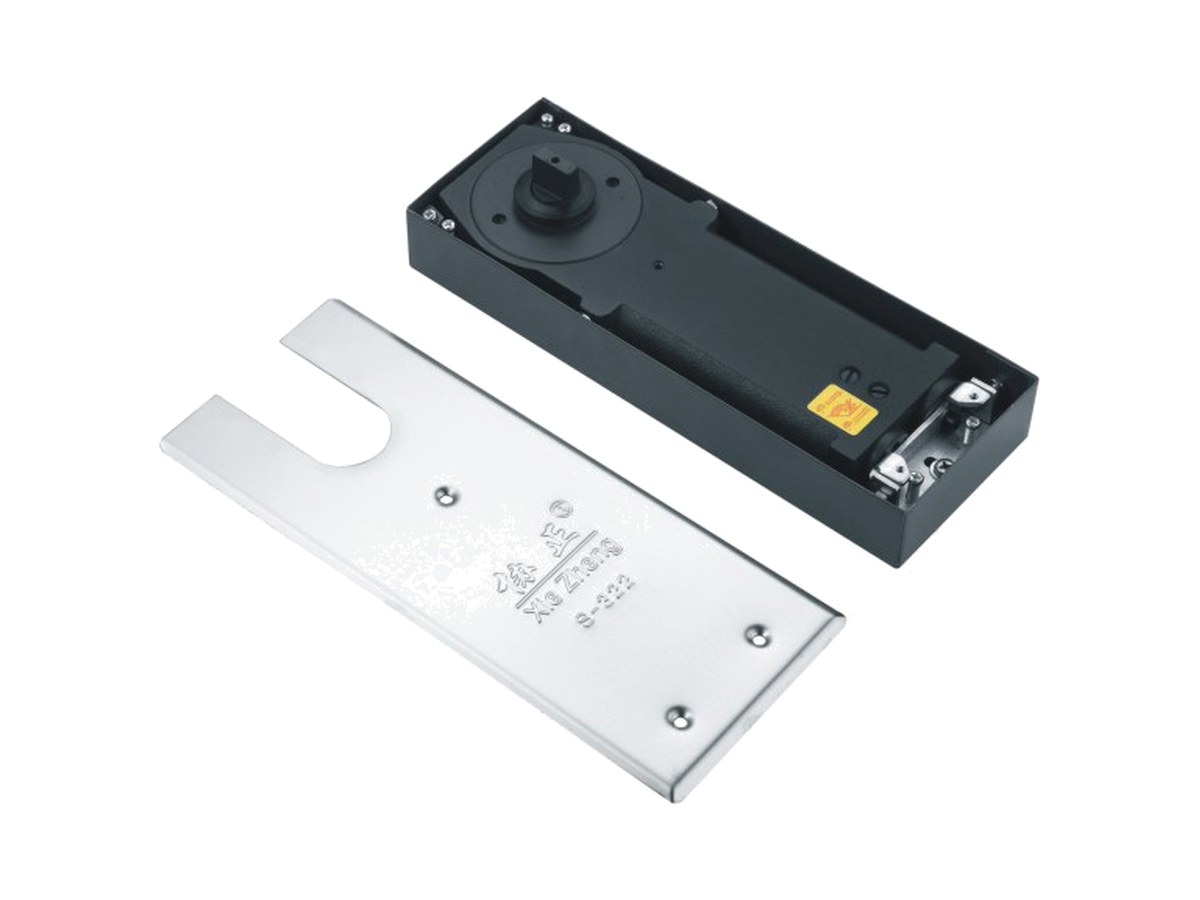
Three recurring mistakes: fitting only a door contact on a normally-open door with no linked closing device; omitting the coordinator on a double leaf; and substituting an ordinary closer for a certified fire-door closer.
No. The rating comes from the whole doorset's integrity and insulation test result. It has no simple relationship to sheet thickness or leaf weight, and both steel and timber doorsets can reach the same grade.
Timber doors achieve their rating through flame-retardant treatment and the core; their A1.5 / A1.0 / A0.5 durations match steel doors. The difference is more about weathering, impact resistance and environment.
Yes. Hardware forms part of the type-tested assembly. Any substitution voids the doorset report; use the approved equivalent and keep the record.
INLINK supplies fire-door hardware and sealing materials, including swing-door locksets, door controls and fire-rated silicone sealant. Send us your door schedule to review the configuration against the new standard.

GB/T 5237.6-2017 and GB/T 23615.1-2017 govern two different goods. Read both markings before you sign the packing list.
Read more
QB/T 2698-2024 covers overhead closers and excludes fire door closers. QB/T 2697-2024 covers floor springs. Fix the scope first.
Read more
How to name the exact AAMA and GB/T edition on an aluminium finish enquiry, and what the 2026 FGIA revisions changed in the specification line.
Read moreSend us the categories, models or opening sizes you need. We will organise the configuration and quotation, in Chinese or English.