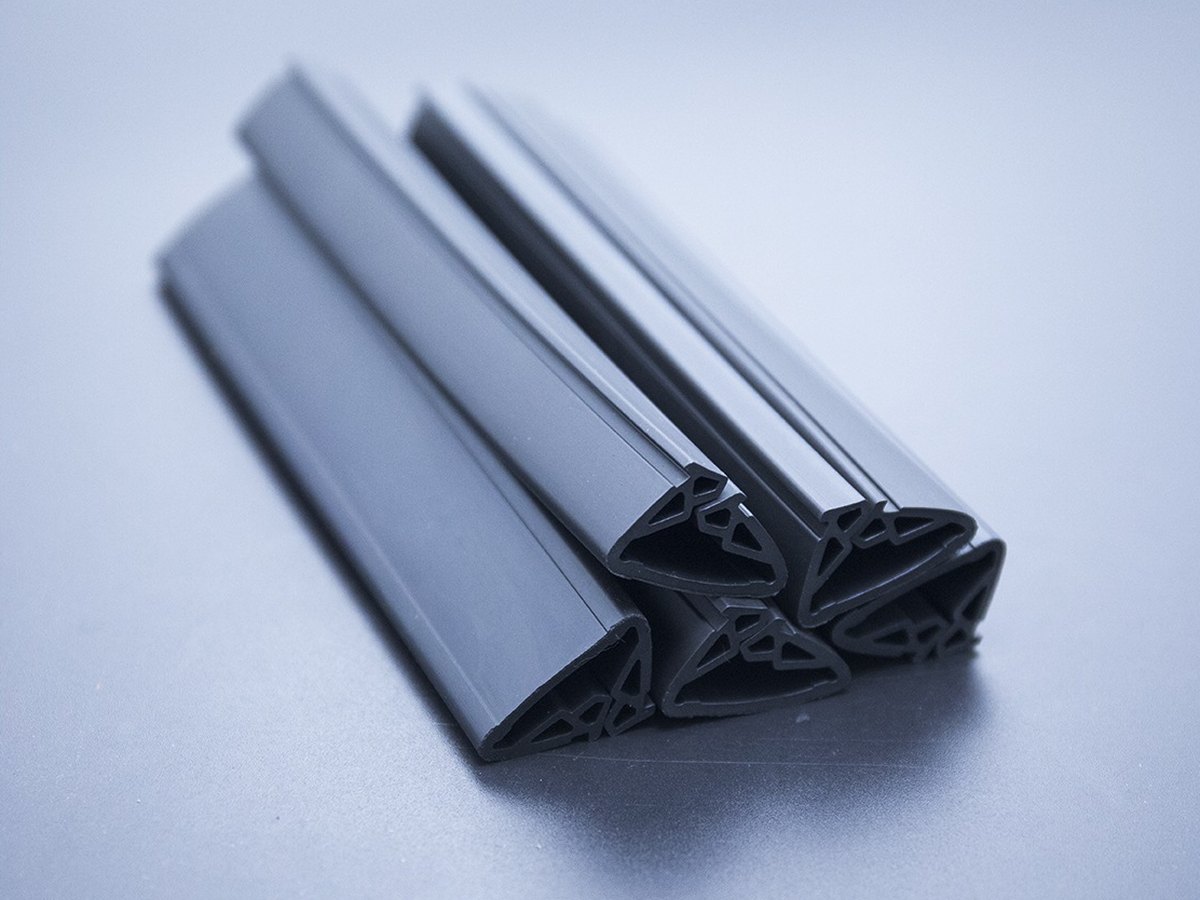
Draughts, water ingress and falling sound insulation are rarely caused by the profile or the glass failing first. More often, the gasket has reached the end of its service life. It is a wear part, and the component most likely to be waved through incoming inspection after a glance. Since 1 August 2025, GB/T 24498-2025, Gaskets for doors, windows and curtain walls of buildings, has been in force, fully replacing the 2009 edition, withdrawn on the same date. It covers the verifiable changes in the standard, plus incoming checks, condition tests and replacement steps that fit on an inspection form.
Many buying guides still cite the 2009 edition, or put forward other withdrawn standards as current references. Writing such numbers into a 2026 technical annex invalidates the acceptance basis. The table below is verifiable item by item on the national standard information platform.
| Item | Detail |
|---|---|
| Standard and title | GB/T 24498-2025, Gaskets for doors, windows and curtain walls of buildings |
| Nature | Recommended national standard |
| Published | 24 January 2025 |
| Effective | 1 August 2025 |
| Status | Current |
| Fully replaces | GB/T 24498-2009, withdrawn on the same date (it had applied since 1 April 2010) |
| Administered by | Technical Committee TC448 on Standardisation of Building Curtain Walls, Doors and Windows |
| Competent authority | Ministry of Housing and Urban-Rural Development |
The standard applies to the design, production and inspection of elastic gaskets for building doors, windows and curtain walls, covering classification and marking, technical requirements, test methods, inspection rules, and packaging and storage. A contract should state the number with its year, not a bare claim of compliance.
According to the standard foreword, the 2025 edition is the first revision of the 2009 edition. Changes concentrate on material systems, product performance and test methods. The table lists the items only; limit values come from the official standard text and third-party test reports.
| Area | Change in the 2025 edition | Effect on acceptance |
|---|---|---|
| Terms | Definitions added for gasket, compression force and composite gasket; free height, elastic recovery, working range and tensile recovery revised | Order and report terminology must be realigned |
| Classification | Classification, codes and marking revised; composite gasket category added | Old type markings may no longer correspond |
| Material properties | Requirements for vulcanised rubber and thermoplastic elastomer revised; tear strength, sponge rubber and flame-retardant requirements added | The item set on a type-test report has changed |
| Composite gaskets | Material requirements added for water-swellable and sponge-coated composite gaskets | Composite products need their own report items |
| Product performance | Added product density, mass loss on heating, peel resistance, friction coefficient, brittleness temperature, repeated water absorption, high and low temperature resistance, fatigue resistance, compression force and limits on hazardous substances | More dimensions to check on delivery |
| Deleted items | Mass loss on heating for materials, and grading of elastic recovery after heat ageing, removed | Old report conclusions cannot be carried over |
| Test methods | Tear strength method added, compression set method revised, fire tests such as oxygen index, vertical burning and smoke density added | Flame-retardant projects need matching reports |
Material testing follows the corresponding national methods for hardness, tensile strength, elongation at break and tear strength. Inspection is split into factory and type inspection, with appearance and dimensions sampled by count, and type inspection triggered by new product qualification, major material or process changes, and resumption after a halt. That is a framework an inspection form can cite, rather than numbers to guess at.
By material, gaskets are single-material or composite. Single-material covers vulcanised rubber (including silicone rubber), sponge rubber and thermoplastic elastomers; the composite category adds water-swellable, sponge-coated and wire-reinforced constructions. Marking consists of the document number, the material category code and the product density code.
This matters on site. The main seal, weathering lip, glazing wedge, pile strip and self-adhesive strip have different sections and materials, so one gasket for a whole window is not a valid specification. EPDM gaskets are common for the main frame-to-sash seal, silicone rubber gaskets suit higher temperature or environmental requirements, and self-adhesive seals are typical for retrofitting timber, security and sliding doors. An order should list material category, section shape and groove dimension by position.
This pairs with system window installation and water-test acceptance: a gasket is one part of whole-window air and water tightness, and compliant paperwork does not guarantee a leak-free installed window. Spray and air-tightness checks still belong in the installation stage.
Rules such as replace after a fixed number of years, or replace once compression set exceeds a given percentage, have no uniform basis. Material, climate, orientation and opening frequency vary too much. Establish a baseline and review periodically:
Maintenance: wipe with a soft damp cloth and a mild neutral cleaner, never petrol or solvent thinners, which accelerate hardening. Dry afterwards.
Not in 2026. GB/T 24498-2009 was withdrawn on 1 August 2025, and the new edition adds and removes items, so the old item set no longer matches. Ask for a type-test report issued against the new edition.
No. Hardness is one dimension; section design, compression, elastic recovery and wear resistance matter too. A main seal is usually softer to absorb profile tolerances, while weathering lips and rubbed positions need a harder section. Matching by position beats picking the softest option.
Base the choice on project climate, temperature range, environmental requirements and cost, and compare the test reports for the relevant material category. Cold climates demand more of low-temperature flexibility; high-UV regions demand more of weathering.
Advisable. Replacing gaskets changes the sealed state of the window. Beyond opening and paper tests, a wind-and-rain check or water spray test to project requirements confirms corners and drainage paths are unaffected. File it with the installation records.
That depends on the contract and design documents. Where fire or environmental requirements are specified, state them at enquiry stage and request the matching reports rather than adding them at handover.
Putting the standard edition, material marking, six incoming checks and three post-replacement verifications on one form removes the guesswork from gasket acceptance. To match gasket sections and material categories to specific window positions, or to check the range of EPDM sealing products, send profile groove drawings and project climate conditions via the contact page and we will return a configuration and inspection checklist against the current standard.

GB/T 5237.6-2017 and GB/T 23615.1-2017 govern two different goods. Read both markings before you sign the packing list.
Read more
QB/T 2698-2024 covers overhead closers and excludes fire door closers. QB/T 2697-2024 covers floor springs. Fix the scope first.
Read more
How to name the exact AAMA and GB/T edition on an aluminium finish enquiry, and what the 2026 FGIA revisions changed in the specification line.
Read moreSend us the categories, models or opening sizes you need. We will organise the configuration and quotation, in Chinese or English.