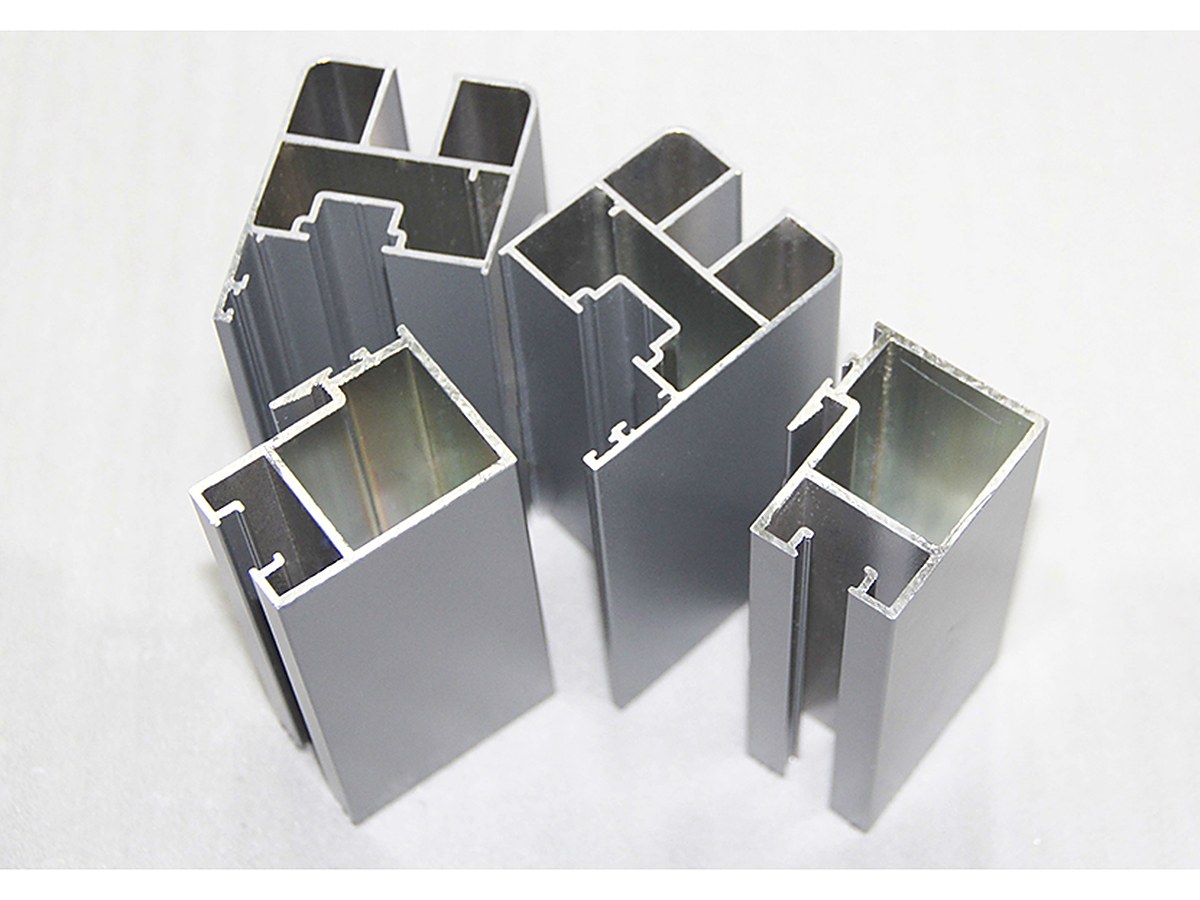
An enquiry arrives with LD31 on the drawing. One supplier quotes 6063-T5, another offers EN AW-6063 T6, and a third asks whether A6063 would be acceptable. All four lines describe the same family of material, yet they are not interchangeable specifications. This is where costly disputes begin: a buyer assumes a grade cross-reference is an equivalence, a mill supplies to the standard named on its own certificate, and the finished profiles fail incoming inspection. This guide sets out what an aluminium alloy designation actually fixes, how China replaced its old letter codes with the current system, how the same alloy is written in AA, EN and JIS documents, and which fields belong on a purchase order. Only facts verifiable against published national standards are treated as acceptance criteria; performance figures, prices and market shares from unsourced trade articles are deliberately omitted.
Confusion usually comes from treating a grade name as a complete specification. It is not. Three independent items have to be fixed before a material can be ordered and checked.
| Decision | What it fixes | Typical form |
|---|---|---|
| Alloy designation | The chemical composition family and its registered limits | 6063, 6063A, 2A12 |
| Temper designation | The processing condition and the resulting property basis | T5, T6, H112, O |
| Product standard and form | Which tolerances, tests and delivery conditions govern | Extruded architectural profile, extruded industrial profile, sheet |
Write only 6063 and the supplier still has to guess the temper, the product form and the governing standard. Write 6063-T5 and the temper is fixed, but the dimensional tolerances and surface finish requirements are still open. A complete line on a drawing names all three.
Three national standards do the work. The table follows the records and full-text prefaces of the national standard information platform and the national digital standards library. Re-check status by number before copying them into a technical annex.
| Document | Scope | Status | Published | Effective |
|---|---|---|---|---|
| GB/T 16474-2011 | Designation system for wrought aluminium and aluminium alloys | Recommended, current; fully replaces GB/T 16474-1996 | 2011-12-30 | 2012-10-01 |
| GB/T 3190-2020 | Chemical composition of wrought aluminium and aluminium alloys; covers sheet, strip, foil, tube, rod, profile, wire, forgings and their stock | Recommended, current | 2020-03-31 | 2021-02-01 |
| GB/T 16475-2023 | Temper designation system for wrought aluminium and aluminium alloy products (rolled, extruded, drawn, forged) | Recommended, current; replaces GB/T 16475-2008, itself withdrawn | 2023-08-06 | 2024-03-01 |
Two points are easy to miss. The /T in these numbers means a recommended, not mandatory, national standard: it becomes a contractual requirement only when the drawing or purchase order cites it. And the 2023 temper standard is a genuine revision, not a reprint. Its preface lists newly added tempers including T39, T4P, T61, T64, T66, T6A, T6B, T77, T84 and T89A, revised definitions for T73, T74, T76 and T79, a new T62A verification temper, and revised stress-relieved W designations. An older specification sheet that quotes the 2008 definitions may no longer describe the same set of available conditions.
The current Chinese system uses a four-character registration. The first digit identifies the alloy group: 1xxx for commercially pure aluminium, 2xxx for aluminium-copper, 3xxx for aluminium-manganese, 4xxx for aluminium-silicon, 5xxx for aluminium-magnesium, 6xxx for aluminium-magnesium-silicon, 7xxx for aluminium-zinc and 8xxx for other alloy systems. In the 1xxx group the last two digits express the minimum aluminium purity in hundredths of a percent; in the 2xxx to 8xxx groups they simply distinguish alloys within the group. A letter in the second position marks a modification of the original alloy, which is why Chinese registrations such as 2A12, 5A02 and 7A09 exist alongside international four-digit names. The letter is part of the designation, not decoration, and must not be dropped when copying it into an order.
GB/T 16475-2023 uses a single capital letter for the basic condition: F for as-fabricated, O for annealed, H for strain-hardened, W for solution heat treated, and T for thermally treated to a stable condition other than F, O or H. Additional digits define the treatment. T5 means cooled from a hot-working process and then artificially aged; T6 means solution heat treated and then artificially aged. H112 applies to hot-worked products with specified mechanical properties, while H116-type tempers are reserved for particular 5xxx alloys with specified mechanical and exfoliation-corrosion requirements. Because T5 and T6 describe different thermal routes, they are not alternative spellings of one condition. Selecting window and door profiles or industrial extrusions without stating the temper leaves the most important property variable undefined.
The reference tables circulating online were compiled across several decades. They mix older Chinese letter codes, a 2008 blog table and national designations that have since been harmonised. Their value today is documentary: they help you read an old drawing, not buy material.
| Legacy Chinese code | Current family commonly mapped to it | How to treat it |
|---|---|---|
LD31 | 6063 | Retired code; rewrite the order with the current designation |
LD30 | 6061 | Retired code; confirm chemistry against GB/T 3190-2020 |
LF2 | 5A02 / 5052 family | Retired code; tables disagree on the exact counterpart |
LF21 | 3A21 / 3003 family | Retired code; used mainly on older sheet specifications |
LY12 | 2A12 / 2024 family | Retired code; check whether the drawing needs the A-variant |
LC9 | 7A09 / 7075 family | Retired code; one table maps it to 7075, another to 7175 |
L3 | 1050 / 1050A family | Retired code; the letter-suffixed variant is a different registration |
That last inconsistency is the reason never to use a cross-reference table as an acceptance document. The same compilation also carries old German DIN, British BS, French NF and Soviet GOST columns. Those national designations have largely been superseded in European trade by the EN AW series, so a drawing that names them needs a conversion agreed with the supplier, not a guess by the buyer. The same applies to legacy temper codes such as M, R, Y, CZ, CS and RCS: old conversion tables map some of them onto O, H112 or F, T4, T6 and T5, while others correspond to H subdivisions. Treat them as historical notes and ask the mill to restate the material in the current GB/T 16475-2023 notation.
The four-digit number itself travels well. What changes is the prefix and the standard that defines the composition limits behind it.
| Current GB designation | North American (AA) | European (EN 573-3) | Japanese (JIS) |
|---|---|---|---|
| 6063 | AA 6063 | EN AW-6063 | A6063 |
| 6061 | AA 6061 | EN AW-6061 | A6061 |
| 5052 | AA 5052 | EN AW-5052 | A5052 |
| 3003 | AA 3003 | EN AW-3003 | A3003 |
| 2024 | AA 2024 | EN AW-2024 | A2024 |
| 7075 | AA 7075 | EN AW-7075 | A7075 |
The American system is maintained by the Aluminum Association and is also used as the basis for ANSI H35.1 designation practice. The European EN 573 series adds the EN AW- prefix for wrought products and also permits chemical-symbol names. Japanese practice adds the A prefix. The ISO 209 series uses chemical-symbol designations, and ISO 2107 covers temper designations. These are naming systems, not a single global certificate.
Even where the digits match, composition ranges, impurity limits, temper definitions and product standards can differ. EN AW-6063 and EN AW-6063A, for example, are separate registrations with different limits; the trailing letter cannot be treated as optional. A supplier may legitimately hold a certificate to one standard and not another. The practical rule is simple: the standard named on the controlling drawing governs material acceptance, and any proposed substitution has to be agreed in writing with a composition comparison attached. For a related discussion of which documents to cite with curtain wall profiles, see our earlier GB/T 5237 finish and RFQ checklist.
Eight fields close almost every ambiguity we see in incoming enquiries:
For extrusion projects, our GB/T 6892-2023 tolerance checklist covers the drawing and goods-in side, while the series and slot guide covers section selection. Finish and tolerance decisions belong in the same enquiry as the alloy, because a mill certificate for chemistry says nothing about a coating or a dimensional class.
The same logic runs through our aluminium range: window and door profiles and curtain wall profiles are normally specified with a 6xxx alloy and an agreed temper, industrial profiles need the general engineering product standard cited alongside the alloy, and PVDF-coated aluminium veneer adds a substrate designation and a coating standard on top. If you are working from an older drawing, send the schedule and the designation as written; we will restate it in current notation and mark any gaps rather than filling them in silently.
LD31 is a retired Chinese code that legacy tables map to the 6063 family. Use it only to interpret an old drawing. New orders should name the current designation, the temper and the composition standard, and the mill should confirm the chemistry against GB/T 3190-2020.
Not automatically. The digits refer to the same alloy family, but the drawing may also require a specific product standard, dimensional class and finish. Agree the substitution in writing and attach a composition comparison before production starts.
T5 and T6 describe different thermal routes for the same alloy, so the property basis is different. A certificate that names only 6063 does not tell you which condition was supplied.
At minimum name the composition standard for the designation, the temper standard, and the product standard for the form being bought. Recommended national standards become binding only when the contract cites them.
Ask the supplier to restate every line in current GB/T 16474, GB/T 3190 and GB/T 16475 notation, then confirm the conversion in writing. Do not let a cross-reference table make that decision for you.

GB/T 5237.6-2017 and GB/T 23615.1-2017 govern two different goods. Read both markings before you sign the packing list.
Read more
QB/T 2698-2024 covers overhead closers and excludes fire door closers. QB/T 2697-2024 covers floor springs. Fix the scope first.
Read more
How to name the exact AAMA and GB/T edition on an aluminium finish enquiry, and what the 2026 FGIA revisions changed in the specification line.
Read moreSend us the categories, models or opening sizes you need. We will organise the configuration and quotation, in Chinese or English.