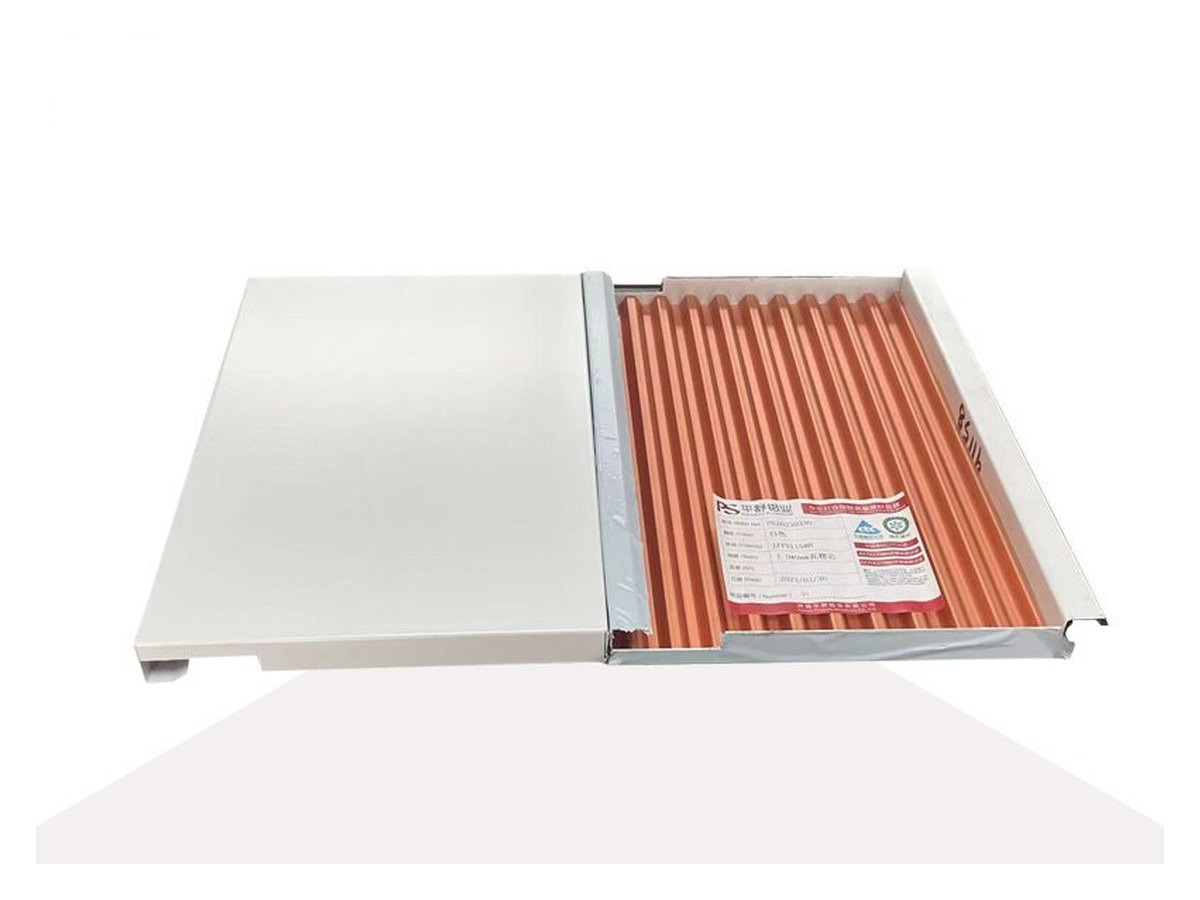
Aluminium veneer is costly to get wrong: replacing fixed panels means dismantling, rechecking the support frame and matching a colour batch that may no longer exist. So the real consequence of 1 May 2025 is realigning four things: the edition cited in the contract, the items on the type-test report, the basis for re-testing, and the documents due with each batch. This guide keeps to facts verifiable on China's national standard information platform, then turns them into enquiry and inspection checklists. Unsourced figures are excluded.
Every row below comes from the standard's record and status page on the national standard information platform. Re-check status by number before pasting it into a technical annex.
| Item | Detail |
|---|---|
| Standard | GB/T 23443-2024, Aluminium panels for building decoration (建筑装饰用铝单板) |
| Nature | Recommended national standard (GB/T); product standard |
| Published | 26 October 2024 |
| Effective | 1 May 2025 |
| Status | Current |
| Fully replaces | GB/T 23443-2009 (published 25 March 2009, effective 1 January 2010), now withdrawn |
| Administration | TC195 (lightweight and decorative building materials); China Building Materials Federation; plan 20191220-T-609 |
| Classification | CCS Q73; ICS 91.060 |
Two points are routinely missed. The "T" means a recommended, not mandatory, standard: it binds a project only when cited in the contract, drawings or annex, so claims that the "new standard is compulsory" are inaccurate. And the 2009 edition is withdrawn, so a contract signed after May 2025 should not rely solely on an old-edition report. GB/T 23444-2024 covers metal-composite ceiling panels and should not be confused with the veneer standard.
Published interpretations agree on the following groups of changes. Only dimensions of change are listed: limits, grade definitions and test conditions must come from the official text and a new-edition type-test report. Section 3 explains why.
Classification by facing material and process was revised; "film thickness" became "decorative facing thickness" and "facing performance". Laminated panels entered scope, closing a 2009-edition gap. For a buyer, "coated aluminium panel" is no longer enough: the process must be stated.
Alloy series, nominal substrate thickness (excluding coating) and mechanical properties for exterior panels were made explicit, and stiffener size, layout and connection tied to the design documents, a standard-level answer to unreinforced panels. Large-format and curved panels need stiffeners on the shop drawing. Honeycomb and corrugated composite panels need their own face-to-core requirements.
Thickness rules for fluorocarbon, polyester, powder, anodised and laminated facings were refined; a pollution-resistance item and its test method were added; and weathering became graded so a project can match a grade to its climate and design life. PVDF is typical for exposed facades. PVDF-coated veneer and powder-coated veneer are different processes with different inspection items and should not share one checklist.
Interpretations also describe new laminate-thickness methods, a revised stud-connection test, eddy-current measurement, and deletion of the natural-exposure annex in favour of accelerated ageing plus grading. Old reports may therefore use different methods: compare item by item, not on a summary "pass".
| Area of change | Action for the buyer |
|---|---|
| Classification and marking | Require full new-edition marking; check against contract and nameplate |
| Substrate and stiffeners | State alloy, thickness and stiffener layout in drawings and annex |
| Decorative facing | Specify process, resin, colour and gloss; agree a sealed sample |
| New performance items | Require report coverage; commission supplementary tests for gaps |
| Weathering grades | Designer sets the grade from climate and service life |
| Test methods | Reports under new-edition methods; witnessed sampling where agreed |
Secondary articles contradict one another. Exterior substrate thickness, minimum roller-coated fluorocarbon thickness, pollution-resistance criteria, salt-spray and ageing durations, colour-difference and gloss limits, even alloy yield strengths each appear in incompatible versions, alongside unsourced cost-saving and service-life claims and price-per-square-metre tables. Most come from promotional sites; none is verifiable against the official record.
Three rules are safer: cite only the standard number and edition; take limits from the official text and a new-edition report, checking it is complete; and convert contested properties into site actions: calliper for substrate thickness, eddy-current gauge for facing thickness, sealed-sample comparison for colour and gloss, drawing check for stiffeners. That beats a table of numbers from an unknown source.
Copy these into an enquiry or annex to stop key requirements being buried under "standard configuration".
Four gates work better than a visual glance. Keep the order: a batch failing on documents should not proceed to measurement.
Check the cited edition, report basis and completeness, conformity certificate, marking and nameplate, and whether the delivered batch matches the reported batch. Request supplements before installation.
Inspect flatness, scratches, fold angles, corner brackets, hangers and stiffener connections. Compare colour and gloss with the sealed sample; keep one facade to one batch. For waviness, check stiffener layout before blaming transport.
Sample substrate thickness with a calliper and facing thickness with an eddy-current gauge; check tolerances, folds and stiffener positions against the shop drawing and verify flatness. The installation accuracy of curtain wall profiles belongs to a separate record.
Reconcile measurements with the report and annex item by item. For weathering and pollution resistance, arrange witnessed third-party sampling. Archive samples, photographs and records for traceability.
| Gate | Typical non-conformity | Action |
|---|---|---|
| Documents | Old-edition report, missing items, batch mismatch | Hold unloading; require supplements or testing |
| Appearance | Colour drift, waviness, missing stiffeners | Segregate the batch; return to drawing review |
| Measurement | Thickness off specification; fold deviation | Extend sampling, up to 100% inspection |
| Reports | No basis for new items; re-testing not done | Witness sampling; no installation before a pass |
Several standards appear on a panel project, each covering something different. Status and dates are verifiable on the national standard information platform.
| Standard | Status and effective date | Role in procurement |
|---|---|---|
| GB/T 23443-2024, Aluminium panels for building decoration | Current; effective 1 May 2025 | Product standard; primary basis for the panels |
| JG/T 331-2011, Fluorocarbon-coated aluminium panels for curtain walls | Current; 13 Jul 2011 / 1 Feb 2012; MOHURD; NEQ AAMA 2605-2005 | Curtain-wall sector standard; may be cited alongside |
| YS/T 429.2-2012, Aluminium curtain wall panel Part 2: coated panel | Current; 7 Nov 2012 / 1 Mar 2013; replaces 2000 edition | Sector standard for substrate and coating |
| GB/T 5237 series, Aluminium alloy extruded profiles for architecture | Current by part | Governs extrusions, not sheet; see the GB/T 5237 finishes checklist, but do not apply profile clauses to veneer |
| GB 50210-2018, Construction quality acceptance of building decoration | MOHURD announcement No. 1834; effective 1 Sep 2018; 2001 edition withdrawn | Works acceptance and inspection lots, not a product standard |
In short: incoming acceptance follows the product standard; sectional acceptance follows the construction acceptance standard. Mixing them means using installation tolerances to displace product items, or offering a product report in place of a concealed-works record.
For an enquiry list and inspection form tailored to a specific facade, use the contact page to describe the exposure conditions.
That depends on the contract, design documents and local acceptance rules. GB/T 23443-2024 is recommended and binds a project through its contract reference; an existing contract citing the old edition is governed by it. New projects should not cite a withdrawn edition, and report items should match the cited edition.
No. The "T" denotes a recommended national standard. What matters is whether it is cited in the contract, drawings or annex. Getting that citation right beats arguing about compulsory status.
Reports should match the edition cited in the contract. Where the new edition is cited, ask for a report covering its items or supplementary tests for changed items, and verify the reported batch matches the delivered batch.
No. Veneer is sheet (GB/T 23443 plus curtain-wall product standards); profiles are extrusions (GB/T 5237 series). Classification, sampling and performance items differ.
Not advisable: the figures contradict one another and lack a verifiable origin. Cite only the standard number and edition, take limits from the official text and type-test report, and verify on site by measurement and sealed-sample comparison.
Query the national standard information platform by number and check publication date, effective date, status and the "fully replaces" relationship; sector standards are in its sector-standard database. Keep a dated record with the project documents.

GB/T 5237.6-2017 and GB/T 23615.1-2017 govern two different goods. Read both markings before you sign the packing list.
Read more
QB/T 2698-2024 covers overhead closers and excludes fire door closers. QB/T 2697-2024 covers floor springs. Fix the scope first.
Read more
How to name the exact AAMA and GB/T edition on an aluminium finish enquiry, and what the 2026 FGIA revisions changed in the specification line.
Read moreSend us the categories, models or opening sizes you need. We will organise the configuration and quotation, in Chinese or English.