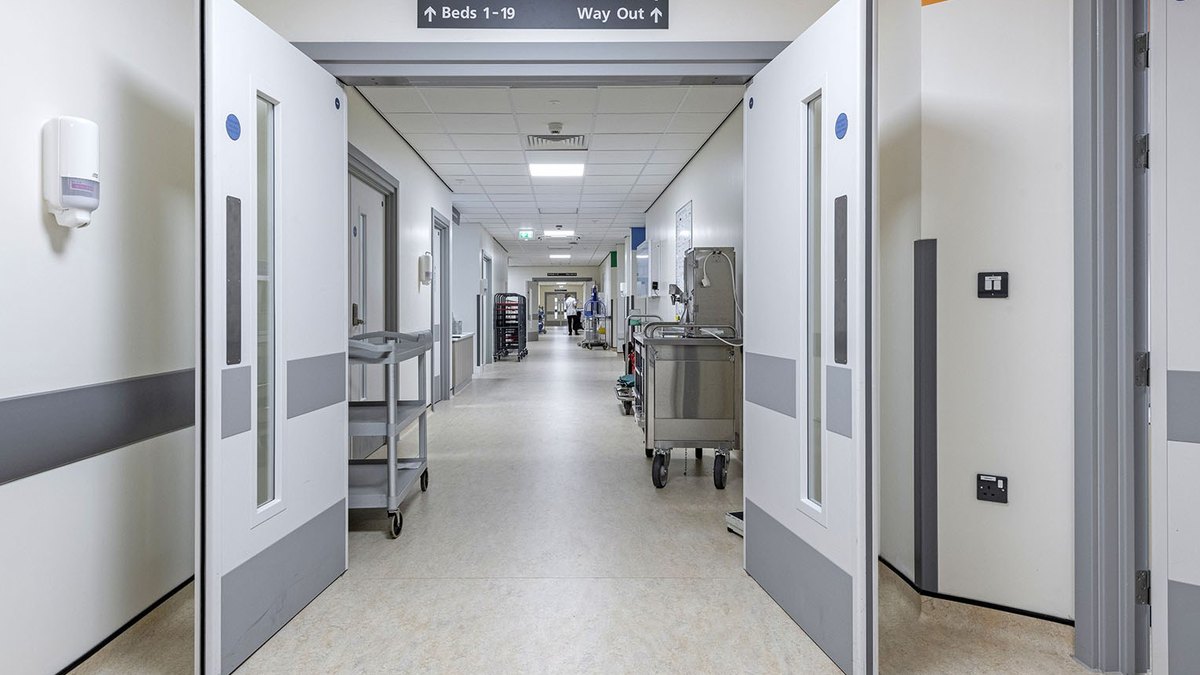
A fire door is not signed off once at handover. Under NFPA 80 it is a listed assembly whose rating only survives while the leaf, frame, hardware, glazing and seals keep working together. For an owner, that turns a purchase into a recurring, documented obligation: the annual inspection. This guide covers what the standard asks for after installation, which edition applies, and what belongs in the handover pack.
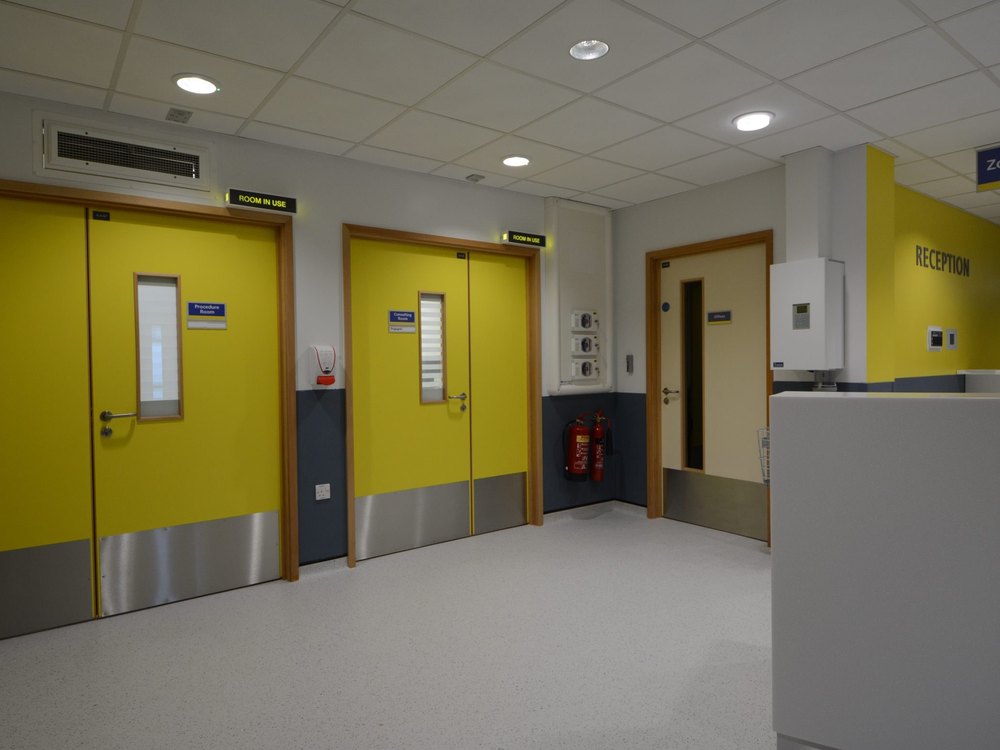
The building code and the AHJ decide which openings need protection and what rating applies, usually from the IBC or NFPA 101 and their opening-protective tables. NFPA 80 then governs installation, inspection, testing and maintenance. Confusing the two produces bad specifications: a rated door quoted for an opening the code did not require to be rated, or a rating omitted where the code did require one.
For a buyer, the first line of an enquiry should therefore name the adopted code and the AHJ, not just a minute rating. If the door schedule says only "90-minute fire door", ask which wall, which code table and which edition produced that number.
The 2025 edition is the current published edition of NFPA 80; it was issued by the NFPA Standards Council in 2024 and supersedes the 2022 edition. That does not mean every building is judged against it. The controlling edition is the one the jurisdiction adopted through its building or fire code, and many jurisdictions still enforce earlier editions. Healthcare facilities surveyed under CMS rules work from an older Life Safety Code edition altogether. NFPA's own fire door FAQ, written against the 2025 edition, cites Section 5.2.4 for inspection frequency; the same requirement carries different clause numbers in earlier editions, and the 13-item checklist also moved between editions.
Do not copy clause numbers from a supplier blog. Name the adopted edition in the specification, ask the AHJ to confirm it, and reference that edition in the report. Chapter 5 of the 2025 edition covers inspection, testing and maintenance; Chapter 6 covers swinging doors with builders hardware.
NFPA's official FAQ states the requirement plainly: fire doors must be inspected and tested immediately after the initial installation and then at a minimum annually after that. The work is done by a qualified person with knowledge of the operating components and the type of door being tested. That may be the building owner or a third party, provided the person's credentials are acceptable to the AHJ. The owner remains responsible for making the inspections happen, correcting deficiencies and keeping the records available for the AHJ.
| Trigger | What is required | Who owns it |
|---|---|---|
| Immediately after installation | Inspect and test each fire door assembly before handover is accepted | Contractor and owner, with the record kept by the owner |
| At least once a year | Repeat the visual and operational checks on every assembly | Building owner or designated representative |
| After repair or hardware replacement | Re-check the affected door before returning it to service | Owner; ask the AHJ whether a re-inspection record is required |
| On request | Produce dated records with inspector name, door location and findings | Owner; records are made available to the AHJ |
Some occupancies require more frequent checks and a performance-based programme may be accepted in limited cases. The baseline stands: an annual, documented inspection by a qualified person. A certificate is not this year's inspection record.
NFPA's FAQ says the standard contains 13 items to be verified during an inspection and test, and names several of them: labels visible and legible, damage to the assembly, broken or missing components, clearance around the door, compliant signage, and an operational test proving the assembly closes and latches. The complete list belongs to Chapter 5 of the edition your AHJ adopted, so the report should be built from that edition rather than from a downloaded checklist of unknown origin.
| Group | What the inspector verifies | Typical evidence |
|---|---|---|
| Labels and markings | Door, frame and glazing labels are present and legible; signage on the door is permitted | Photograph of each label with the door ID |
| Surfaces and glazing | No open holes, breaks or deterioration in the leaf or frame; vision light frames and beads secure | Visual check from both sides of the opening |
| Clearances and alignment | Gaps at the edges and the undercut are within the limits of the adopted edition and the assembly listing; door and frame aligned | Recorded measurements, not a pass or fail tick |
| Closing and latching | Door closes fully from the open position and the latch engages; coordinator sequences a pair correctly | Operational test, repeated for both leaves |
| Hardware and seals | Hinges, closers, locks and auxiliary items are listed, secure and unmodified; gasketing and edge seals intact where required | Hardware schedule checked against the listing |
| Field modifications and obstructions | No unauthorised cut-outs, no non-listed substitutions, no wedges or hold-open devices that bypass the alarm release | Comparison with the manufacturer's installation instructions |
Measure clearances against the limits printed in the adopted edition and the specific assembly listing, then write the reading into the record. Common failure causes are hinge wear, frame movement, a warped leaf and floor settlement; all of them are maintenance issues, not reasons to relax the limit. Avoid carrying a single numeric tolerance from a marketing article into a specification, because the applicable value depends on the edition, the door material and the listing.
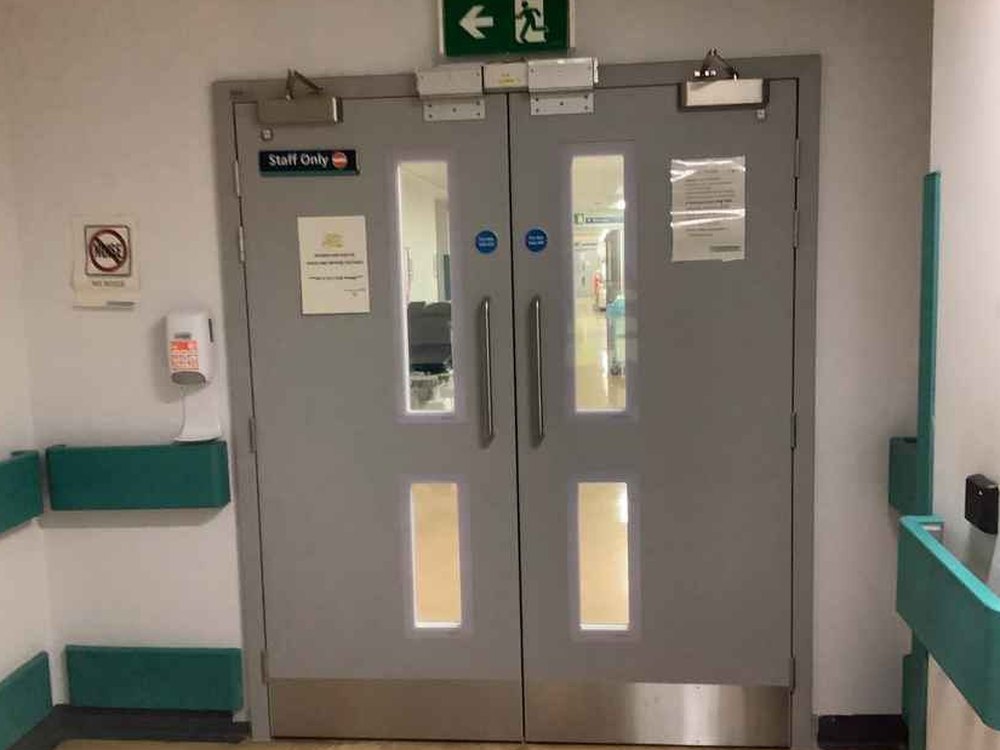
NFPA's FAQ lists what a label must show: manufacturer's name, certification agency mark, component rating, fire test standard, and the 30-minute temperature rise where the listing test recorded less than 650°F (361°C). Labels must stay legible; removing, defacing or painting over them destroys the field evidence that the component was listed. For a lost or painted label, contact the manufacturer or original listing laboratory about a field-applied replacement after verifying the construction. Failing that, replace the door rather than accept it on a visual guess.
Field modification follows the same logic. Work inside the manufacturer's instructions and the listing is generally acceptable. Cutting a new vision light, fitting non-listed hardware, disconnecting a closer, swapping a latching lockset for a passage function, or replacing rated glazing with ordinary glass puts the assembly outside its listing; the remedy is a field evaluation or field label service from the listing laboratory, not a site decision. Wedging or propping a door open is prohibited: the only acceptable hold-open is a listed release device tied to the fire alarm so the door closes on alarm, detector activation or power loss.
Hardware choices made at procurement show up here a year later. A closer, hinge set, latch or exit device that was selected for price rather than for its listing becomes a deficiency at the first annual inspection. Our door control hardware and fire-rated window and door hardware ranges are specified against the assembly, and intumescent seals belong in the same schedule as the leaf and frame.
| Document | Why the inspector needs it |
|---|---|
| Door schedule with a unique ID for every opening | Links each finding to a physical door and makes the annual record auditable |
| Listing or certification evidence for leaf, frame, glazing and hardware | Proves the components were tested and listed for use together |
| Photographs or drawings showing label positions | Lets a future inspector find a label that has become hard to read |
| Manufacturer's installation and field-modification instructions | Defines what may be adjusted on site without voiding the listing |
| Hardware schedule with model numbers and listings | Prevents unlisted substitutions during later maintenance |
| Seal and glazing schedule matched to the tested configuration | Keeps vision panels and edge seals inside the listing's scope |
| Commissioning inspection and test record | Establishes the baseline immediately after installation |
| Template for annual inspection records and deficiency close-out | Makes the owner's recurring obligation repeatable year after year |
The same pack is useful beyond North America: our cross-market standards and document guide maps these documents to UL, EN and AS routes. For projects following Chinese codes, see the GB 12955-2024 class and hardware checklist and the normally-open fire door acceptance guide. If you are assembling a door schedule now, send it to our team and we will reply with the listing and hardware evidence needed for each opening.
NFPA's FAQ states that NFPA 80 requires inspection and testing immediately after the initial installation and at a minimum annually afterwards. Some jurisdictions and occupancies require more frequent checks; confirm the adopted edition and the AHJ's requirements for the specific building.
A qualified person who understands the operating components and the type of door being tested. It can be the owner or a third party, provided the AHJ accepts that person's credentials. The owner stays responsible for compliance even when the work is delegated.
Not automatically. Ask the manufacturer or the original listing laboratory whether a field-applied replacement label can be issued after verification. If the construction cannot be verified and the label cannot be replaced, the assembly cannot be shown to be rated and replacement is usually the practical outcome.
Only within the manufacturer's field-modification instructions and the assembly listing, using listed fire-rated glazing inside the permitted opening size. Anything larger or unlisted needs a field evaluation or field label service from the listing laboratory before the door is returned to service.
Use the clearance limits in the edition your AHJ adopted and in that assembly's listing, and record the measured values. A single number copied from a supplier article is not a safe acceptance criterion, because the applicable limits vary with the edition, door construction and listing.
Inspection frequency, qualified personnel, the 13 items and label content follow NFPA's official fire door FAQ (2025 edition) and current NFPA 80 edition information; code allocation follows the IBC and NFPA 101 framework. Editorial photos were found through public image search and cropped for layout; they are illustrative only. No performance values, clearances or ratings were taken from supplier marketing material.

GB/T 5237.6-2017 and GB/T 23615.1-2017 govern two different goods. Read both markings before you sign the packing list.
Read more
QB/T 2698-2024 covers overhead closers and excludes fire door closers. QB/T 2697-2024 covers floor springs. Fix the scope first.
Read more
How to name the exact AAMA and GB/T edition on an aluminium finish enquiry, and what the 2026 FGIA revisions changed in the specification line.
Read moreSend us the categories, models or opening sizes you need. We will organise the configuration and quotation, in Chinese or English.